Wednesday, November 11, 2009

SOLAS tape

Get out your winter gear folks, cold weather is here! And now that the days are shorter don't forget your SOLAS tapes when you're out on your motorcycles either.

What's SOLAS tape? If you had never heard of it before, SOLAS stands for Safety Of Life At Sea. A highly reflective tape approved by the U.S. Coast Guard specifically designed to enhance the visibility of life jackets, ring buoys, survival suits, and inflatable life rafts in marine environments. It make sense since rescues at sea are also perform at night and SOLAS ' high reflectivity improves the chance of spotting a person/lifeboat when a searchlight hits it.

SOLAS tapes come in two types, an adhesive and a sew-on version. The adhesive version is highly flexible and adheres to rubber-coated cloth, vinyl-nylon laminated cloth, cured polyester cloth, PVC, aluminum, virtually most surfaces. While the sew-on version has all of the adhesive's characteristics but is most likely used in applications where the adhesives version just may not stick too well to and had to be sewn on. Both SOLAS tapes are excellent for outerwear applications such as motorcycle jackets and rain gear. It even sticks to nylon and cordura.

SOLAS is normally sold in 15-foot increments or 55-yard rolls. Depending on who you're buying from they could be on the pricey side, but the way I see it it's a good investment for safety reasons.

I've used SOLAS on my bike and gear ever since I've started riding and have had many occasions to see it in action. Loosing my brother at night in freeway traffic? No problem! I could easily identify him at night with SOLAS on at a quarter mile ahead if not more in my motorcycle's headlight. There's no doubt that I'm highly visible to automobiles and trucks which is a definite added safety measure.

Check it out...

BMW R1200 motorcycle with SOLAS tape

BMW R1200 motorcycle with SOLAS tape

Monday, November 9, 2009

Risk management

I came across an article recently about how people misuse GPS technology. Because they were overconfident and relied on technology as a safety net to bail them out and in doing so got into trouble. Being that I just wrote a post about using GPS trackers for motorcycle touring I thought I should pass it along and make a couple of comments.

I remember when I first started the California MSF (Motorcycle Safety Foundation) course one piece of good advice that I came away with that is still ingrained with me today is "risk management". Let me explain what I view as "risk management" (a variation of the MSF's version).

Philosophically speaking "safety" is an illusion. The reason why I say that is because the odds would be just about even that I would likely slip in my own bath tub, cut my finger while preparing dinner, or crash my motorcycle (if you don't factor in the roles of other motorists or luck). To be completely safe I would have to remain in my house and not do anything which is rather not practical. In our universe, our society we would have to go about our daily business and that takes risks.

While the odds may be more likely that I would cut my finger than getting into a motorcycle accident, most people would say that riding a motorcycle is more dangerous. What we sense as danger in motorcycling is actually the catastrophic results, the after effects of accidents. I believe safety is linked more with risk management.

Whenever I get suited up and ride I understand that there are risks involved. Because I know the consequence of a crash is never desirable I always start a ride with risks in mind. I try not to drive when I'm sleepy or tired, or upset, or angry, or intoxicated, etc., and I wear armor to minimize the results, that's part of my risk management.

Most of the public, however, fail to remember this. So when those people decided to hike into a wilderness area they failed to consider the risks that they're taking (their own safety), choosing only to rely on their GPS to rescue them if they got into trouble. Furthermore, most city folks also forget about their self reliance, their self sufficiency and resourcefulness before hitting that panic button.

The way I see it, it won't be long before somebody, a lawmaker most likely, will pass a law to regulate, tax or penalize the use of GPS and there goes more of our freedom.

You can read the entire article here:
Responders fear misuse of Yuppie 911 GPS beacons

Thursday, November 5, 2009

GPS tracker

SPOT satellite GPS for motorcycles
Earlier in the year my brother bought a SPOT. He figured we'd be going on a lot of motorcycle tours so to ease the minds of our spouses and also to keep interested friends who could not participate updated as to our progresses.

The SPOT is a personal satellite tracking system. The device currently comes in two flavors: the "Personal Tracker" (weighs 7.4 oz and measures 4.4" x 2.7 x 1.7") and "Messenger" (weighs 5.2 oz and measures 3.7"x 2.6" x 1"). Both models are capable of sending an "SOS" (when the situation is life threatening), "HELP" (non-life threatening emergency), "Check-in/OK" (lets friends and family know your status along with location), and "Track Progress" (emit constant broadcast of your progress in real time through Google map) but only the smaller "Messenger" offers a "Custom Message" feature. The SPOT is not your typical navigation GPS where it would show you directions, but functions only as a locator and serves as a beacon to send in reinforcement when you want it to. I should also mention here that there's a charge of $120/year to use the SPOT tracker.

Both models recommend using Lithium batteries. The "Personal Tracker", the larger of the two, takes AA type batteries while the "Messenger" AAA types. Battery usage for the larger unit is quoted to be 1 year if power is on but unused, 14 days in tracking mode, 7 days in SOS mode or 1900 messages. As for the "Messenger", 94 days with power on but unused, 4.3 days in tracking mode, 2.8 days in SOS or 350 messages.

Check out these user guides:
SPOT Personal Tracker
SPOT Satellite GPS Messenger

Monday, November 2, 2009

The motorcycle wave (follow up)

I went to the Pomona BMW dealer to drop off my F650GS to get the front fork seal serviced over the weekend. My brother accompanied me on the short stint and through our conversation while at the dealership the topic of the motorcycle wave came up. I wrote a bit about the motorcycle wave a few posts back but I thought I'd mention about this new anecdote here because I found it rather amusing.

My brother works at the NASA JPL (Jet Propulsion Laboratory) in Pasadena, California and commutes daily to work on his BMW F800GS motorcycle. One day while going to work he noticed another two-wheeled motorist coming from the opposite direction probably also commuting to work. The thing that was striking about this fellow was that he was in full gear and riding a scooter. Not only do my brother and I believe in "all the gear, all the time" (ATGAT) but we understand and greatly sympathize with those who take the time to don the hot and sometimes uncomfortable protection gear before hitting the road. So as he was passing by my brother waved the peace sign. The guy just stared straight ahead ignoring him and probably wondering, "What the..."

The next day, he saw the same fellow and flashed the friendly "V" sign again. This time he just looked. Probably curious if my brother was waving to him. It went on this way for about a month then one day he finally understood and enthusiastically wave back with his peace sign. He's finally understood the fraternity of two-wheelers! He didn't think he was part of the motorcycle crowd but he always was, ever since he decided to ride!

Truth is, by being friendly with other motorist we could create a safer environment with fewer road rages and accidents, something that we forget when we're in cars where we are locked away in our own little cages, our little worlds.

So the next time you're on the road and someone give you the peace sign just remember: "peace and be safe."

Wednesday, October 28, 2009

Motorcycle intercom / radio communication system

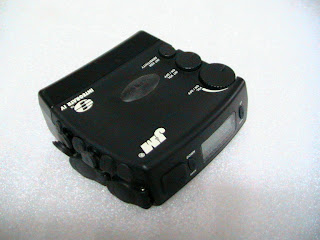
J&M Integratr IV portable motorcycle audio system

Last night I was pondering about what to post and thought back to my last motorcycle touring trip. The trip wasn't a failure but definitely could have been better. The problems that we ran into were not what I considered major but all the small annoyances added up to make the trip miserable. The ability to communicate amongst ourselves was one of them. Considering that 3 out of the 4 motorcycles on that tour carried communication radios and wouldn't you know it... the one that didn't exacerbated the problem for our small group.

This rider is a good friend of ours and is a frequent participant in out motorcycle tours. We had tried convincing him to obtain an intercom radio so that he could tune in on many occasions but he usually just shrugged it off. The group lead, my brother, even bought a radio system and handed to him but he just wouldn't consider using it. Perhaps he didn't like radio chatter or for other reasons that I never heard him mention. But from my perspective he could always turn the intercom off and switch it back on when the situation warrants it to stay tuned in. I know it's his prerogative but the lack of communication gave us issues at times.

I guess here is where I would like to point out some positives about radio intercom systems. First and foremost everyone stays in contact. Anyone getting separated because of traffic lights, for example, as it so often happens when we arrive in a major city, could easily give the leader a quick status and plan a meet up point if need be. Moreover, riders could notify leaders of their physical conditions: fatigue, bathroom breaks, being hot/cold and the need to take off/ put on gear. They could also communicate their need for gas stops, mechanical troubles, et cetera.

Motorcycle riding to me is total freedom so I do not wish to push anything on anyone. But if you're riding in a pack that uses radios extensively wouldn't you consider getting an intercom system? In which case I would suggest the J&M Integratr IV (this is not a misspelling), also known as the JMSR-4020. I've been using this intercom unit paired with the Motorola Talkabout 250 FRS/GMRS two-way radio (walkie-talkie) ever since I've been riding in my brother's group. I must admit I had never tried any other setups, however, I can vouch for this setup as being a very good one from experience riding with it the last several years.

A few years back, before the Integratr VI was produced, BMW had contracted J&M to design an intercom / radio system for their K1200LT motorcycle line and gave J&M all the specs for the system they wanted. After the contract ended BMW surprisingly did not impose copyright, or restrict J&M from using their technology, the result a few years later was the Integratr IV. So if you decide to try this unit out you're actually getting a piece of BMW technology.

The J&M Integratr IV features a FM stereo radio tuner, a driver-to-passenger voice operated transmit and receive (VOX) intercom, an auxiliary stereo input for an MP3 or iPod-type music devices or satellite radio units (a great feature for those long, boring stretches of highway). As the name implies the Integratr IV is able to integrate a number of accessories: cell phone, a 40-channel Citizen's Band (CB), or Family Radio Service or a General Mobile Radio Service FRS/GMRS two-way radio (this is where I connect my Motorola Walkabout 250 radio).

The cool thing about the Integratr IV is that it could either use stand alone power from 8 AAA batteries easily lasting through a whole day's ride (up to 16 hours of continuous operation), or through the use of J&M's 12V automobile type cigarette lighter adapter that plugs directly into your motorcycle's cigarette outlet for uninterrupted power. Unfortunately for me, BMW built their motorcycles with smaller diameter outlets. Therefore, to use the Integratr IV on my F650GS I had to purchase a standard 12V cigarette outlet cable and plug, and adapted that to my motorcycle's battery. It wasn't hard to do, just took a little bit of work.

The Integratr IV package comes with the intercom unit, a leather pouch and a single auxiliary cable. To complete your setup you would have to purchase everything else separately. This would probably include headset, extension cable, etc. And speaking of cables and headset installation, the setup to suit your particular configuration could get a bit complicated, hence I suggest doing thorough research or speak to J&M (or their dealer) directly before you commit to getting all the pieces since it would be a big hassle to have to return things if you bought the wrong parts.

Operationally, the J&M Integratr IV functions superbly with the Motorola Talkabout 250 two-way radio. I've tested a number of other Motorola FRS/GMRS radios that claimed to have ranges of 15 miles or more, but once installed voice communication through my helmet at freeway speed became distorted, garbled. Even though the Motorola Talkabout 250 has only a 2 mile range it functions flawlessly. Of course you're not limited to Motorola walkie-talkies and could choose from a number of different manufacturers. Furthermore, if you desire more range the Integratr IV could easily accommodate a CB radio.

The Integratr IV is very portable when using batteries and could be worn on you belt via the leather pouch. The unit has a push-to-talk (PTT) button located on top that you could activate with one hand. From my experience chances are more times than not I would need to have both hands on the handle bar so I opted for a PTT cable for ease of use when I'm maneuvering and needing to communicate. You could get one through J&M or in my case I constructed one. I mounted mine near my left thumb.

The disadvantages? The Integratr IV is not waterproof . But this could be easily remedied by placing the unit inside the tank bag or just simply covering it up with plastic to keep it from getting wet. One other thing worth mentioning, not related to the intercom, is the 8-pin upper section, right-angle hook up cord connecting the Integratr IV to my headset. This cable connector easily chafed when I placed my helmet down, resting on the cord frequently. I had to replace one and can foresee that you may have to replace this cable every so often. You could avoid the costly mistake ($40 for a new cable) by simply be aware of the connector when you place your helmet down... or just simply get a couple of spare cables.


J&M 8-pin right angle hook up cord cable=

Overall, the J&M Integratr IV is a very robust intercom system and functions reliably. What disadvantages it has is very minor when comparing to the features it offers. One additional plus is that the cost for the unit has dropped considerably since I bought mine. They run about $120 now considering I bought mine when it was around $300.

Our riding friend could argue about many reasons not to use an intercom system but he sure can't argue that intercom / radios are too expensive to afford.

J&M Integratr IV portable motorcycle audio system manual

Tuesday, October 27, 2009

BMW F650GS fork seals


Roughly two weeks ago my BMW F650GS' fork seals broke while on the the Arizona trip. At that time the right side fork tube didn't look like it was leaking dampening fluid too badly but I was a bit concerned nevertheless since I have not experienced anything similar before and didn't know if broken fork seals could be a major problem or not. When I discovered the leak we had covered about 150 miles out and I was worried that we may have to turn back. Good thing I was riding with an experienced group of people (my brother included), and they reassured me that it wasn't that major and I could probably make the last 850 miles (the rest of the trip).

I was a bit leary still but figured it was only the right fork tube, "If anything I still have the left side intact." Plus the fluid that was leaking out was on the right side and not directly over the left side where my front disc brake was. Sure enough after a bit of fluid loss and 1000 miles later, my F650GS got me home just fine. Lesson learned.

Now it's time to fix it. I had pondered about doing the work myself so I looked up the procedure in the manual on the CD ROM that my brother had bought when he owned this motorcycle. BMW has a very good maintenance and repair manual that shows the process in great detail and description.

BMW front forks

BMW front fork tube 1

BMW front fork tube 2

BMW front fork tube 3

It looked like there were a couple of special tools that I might need to get to perform this fix in addition to getting the new seals. I was also thinking about replacing both fork seals since one failed the other was bound to follow.

I talked it over with my brother but he suggested that I waited while he asked the guys at Brown Motor Works in Pomona, the local BMW motorcycle dealership, regarding repair price. As it turned out, the cost for repair is around $250 for both fork tubes, not too bad. So it now looks like I'll be going to the dealer to have it done.

Oh, well... maybe next time.

Friday, October 23, 2009

Sale at Motorcycle Superstore

Since one of my goggles got pretty scratched up last August in Mammoth I was browsing Motorcycle Superstore for a replacement. When I last looked their "Biketober" was on so they had a bunch of stuff on sale. When I browsed this time it looks like their sale is still on. I found a couple of very affordable goggle models. And since I'm looking for both a clear lens and one with a tint, the Smith Fuel Enduro motorcycle goggle is good candidate. The Fuel Enduro goggle currently runs $19.99, pretty affordable.


Smith Fuel Enduro motorcycle goggle=

My other selection is the Smith Fuel Sweat-X tinted motorcycle goggle. This goggle should be good when I'm riding off road in the tree line. These run $29.99. Still pretty good.

Smith Fuel Sweat-X motorcycle goggle=

Not counting shipping, $50 for two goggles! That's not bad.

Motorcycle Superstore